


Application of Smart Responsive Hydrogel in Chronic Wound Treatment
Release time:
2020-11-21
Chronic wounds refer to wounds that cannot heal in a timely and orderly manner due to external or internal factors over a certain period of time. Chronic wounds are often accompanied by bacterial infections, local ischemia, microcirculation disorders, cellular metabolic disorders, excessive oxidative stress, and infiltration of immune cells, creating a special wound microenvironment that hinders drug delivery.
Chronic wounds refer to wounds that cannot heal through timely and orderly repair due to external or internal factors over a certain period of time. Chronic wounds are often accompanied by bacterial infections, local ischemia, microcirculation disorders, cellular metabolic disorders, excessive oxidative stress, and immune cell infiltration, forming a special microenvironment that hinders drug delivery.
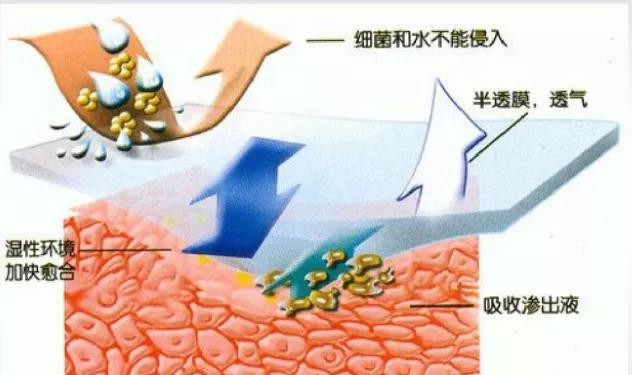
Hydrogel
Smart responsive hydrogels not only absorb wound exudate and remove necrotic tissue, providing a clean and moist environment for wound healing, but also respond to physiological or external stimuli, undergoing changes in physical properties, chemical structure, or both, to selectively release drugs, achieving on-demand drug delivery and improving drug bioavailability, thus having unique advantages in chronic wound healing.
According to different external stimulus environmental conditions, smart responsive hydrogels for wound healing mainly include pH-responsive, temperature-responsive, enzyme-responsive, and light-responsive hydrogels.
01 pH-responsive hydrogel
Healthy skin or acutely healing wounds are slightly acidic, with a pH value in the range of 4 to 6. Chronic wounds, due to bacterial infections and other reasons, have a pH value rising to 7.3 to 10. Therefore, pH-responsive hydrogels can be constructed based on the pH difference between normal tissue and chronic wounds to selectively deliver drugs.
Professor Babak Ziaie's research group at Purdue University developed a pH-sensitive poly(methyl methacrylate-co-methacrylamide) gel as a starter, using scalable layered manufacturing technology to create a 2×2 array pH-responsive skin patch for treating chronic wound infection areas. This patch can withstand a back pressure of 8 kPa, and under alkaline pH stimulation of the wound, the gel swells, causing the elastic membrane to rupture, triggering slow release of antibiotics at a rate of less than 0.1 μL/min for up to 4 hours, effectively inhibiting the growth of Pseudomonas aeruginosa.
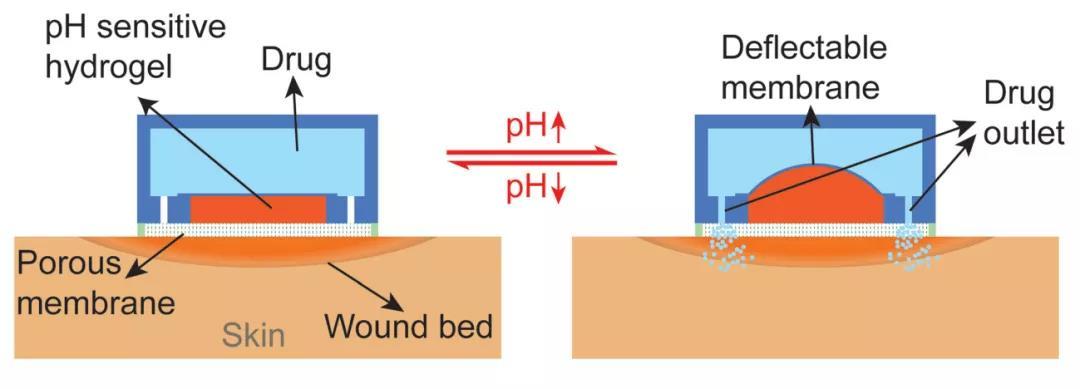 ▲ Schematic diagram of smart skin patch releasing drugs in response to wound pH
02 Temperature-responsive hydrogel
Temperature-responsive hydrogels generally contain both hydrophilic and hydrophobic groups, exhibiting temperature-responsive phase transition properties, with the phase transition temperature being the temperature at which this change occurs.
In situ injectable thermosensitive hydrogels can be used for the treatment of large-area wounds. Professor Wang Shufang's research group at Nankai University constructed a thermosensitive hydrogel (PP) with a phase transition temperature of 28.2 °C using poly(N-isopropylacrylamide) (PNIPAM) and poly-γ-glutamic acid (γ-PGA) to deliver superoxide dismutase (SOD), clearing superoxide anions and promoting wound healing. The results showed that PP hydrogel has good biocompatibility, with a swelling rate of up to 1470±110%, and after 40 hours, the water content can still be maintained at 68±1.6%, protecting SOD from degradation, promoting wound healing in diabetic rats, and improving therapeutic effects, indicating good application prospects in wound repair.
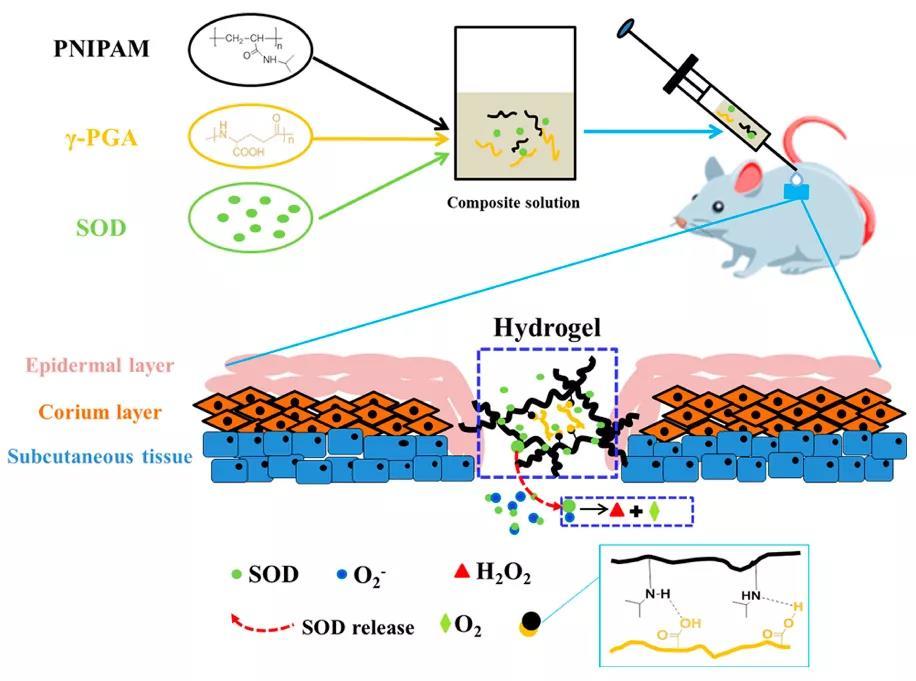 ▲ Preparation and in vivo mechanism of action of in situ injectable thermosensitive hydrogel
03 Enzyme-responsive hydrogel
In chronic wounds, the secretion of matrix metalloproteinases (MMP-1, MMP-2, and MMP-9), elastase, and cathepsin G increases, thus enzyme-responsive hydrogels can be constructed.
Professor Yao Juming's research group at Zhejiang University of Technology co-loaded metal chelating dipeptide (L-carnosine) and curcumin in silk fibroin hydrogel (L-car@cur/SF) for the treatment of infectious diabetic wounds. The study found that this hydrogel has significant antioxidant effects, capable of chelating the Zn2+ ions at the active center of MMP-9, inactivating it, inhibiting bacterial growth in mouse wounds, and improving wound healing efficiency in diabetic mice.
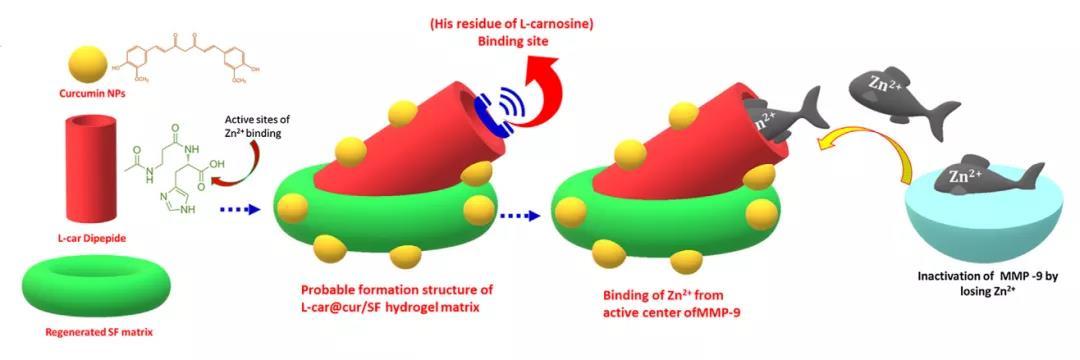 ▲ Mechanism of formation of L-car@cur/SF hydrogel and inactivation of MMP-9 activity in diabetic wounds
04 Light-responsive hydrogel
Light-responsive hydrogels can form cross-linked structures or undergo degradation under the induction of ultraviolet light, visible light, or near-infrared light.
The research group of Wu Chengtie at the Shanghai Institute of Ceramics, Chinese Academy of Sciences, used grape seed extract proanthocyanidin (OPC) as a photothermal initiator, combined with CaSiO3 nanowires, sodium alginate, and L(+)-glutamic acid to prepare a precursor hydrogel, which was then 3D printed to obtain a hydrogel scaffold for melanoma and wound treatment. The photothermal and rheological properties of this hydrogel scaffold can be regulated by controlling the intensity of near-infrared light and the content of OPC, and it has good mechanical properties, effectively inhibiting melanoma growth, promoting the proliferation and migration of human skin fibroblasts and human umbilical vein endothelial cells, and enhancing angiogenesis and skin regeneration in tumor wounds and diabetic wounds.
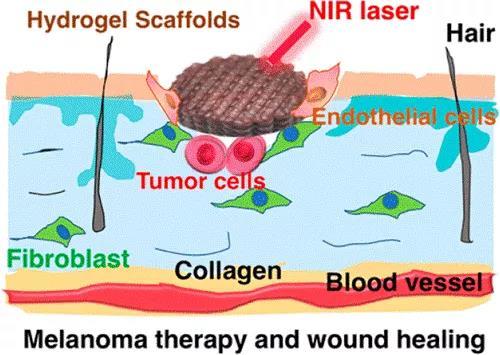 ▲ Schematic diagram of NIR-stimulated hydrogel scaffold for treating melanoma and wounds
Opinion Sharing
Smart responsive hydrogels bring new hope for the treatment of chronic non-healing wounds, but the existing smart hydrogels still face issues such as insufficient support strength, easy triggering of immune responses, low sensitivity to stimuli, and difficulty in precisely controlling drug release amounts and cycles.
Therefore, combining the excellent biocompatibility of natural polymer materials such as hyaluronic acid, alginate, peptides, and proteins with the excellent mechanical properties of synthetic polymer materials to construct smart responsive hydrogels with comprehensive performance remains a significant challenge for achieving precise drug delivery.
In addition, the complex and variable microenvironment of chronic wounds poses great difficulties for the construction of smart responsive hydrogels, and current research reports are very limited, urgently requiring the development of smart responsive hydrogels suitable for chronic wounds.
Traditional Chinese Medicine
The application of traditional Chinese medicine in the treatment of chronic wounds is very extensive, with good clinical effects and value, but there are issues such as slow treatment and low utilization rate of effective components in medicinal materials. Utilizing smart responsive hydrogels to deliver traditional Chinese medicine or its effective components is expected to improve drug bioavailability, enhance targeting, achieve controllable delivery of different components of traditional Chinese medicine to multiple targets, strengthen therapeutic effects, and align with the traditional Chinese medicine philosophy of "timely administration" and "selective timing of medication," showing broad application prospects.
Related Information
Beijing XinyiHuida Electromechanical
E-mail: xinyihuida@163.com
Mobile: +86-13911770565 Mr. Lin (General Manager)
Address: 415, 4th Floor, No.2 Jinguangnan Street, Jinguangnan Street, Xilu Street, Fangshan District, Beijing
Product Category







Copyright© Beijing XinyiHuida Electromechanical Equipment Co., Ltd